

Dr. Veselin Daskalov: More than 40,000 cataract surgeries are performed annually in Bulgaria

An ophthalmologist with many years of experience is the guest in this episode of the Bulgarian National Radio podcast “At the Center of the System,” on the topic of cataracts.
An interview by Gergana Hrischeva with Dr. Veselin Daskalov
—-
The full interview by Gergana Hrischeva with Dr. Veselin Daskalov in this episode of the Bulgarian National Radio podcast “At the Center of the System” can be heard >>>HERE.
—
New and modern methods of cataract surgery in Bulgaria are the topic of this episode of the Bulgarian National Radio health podcast “At the Center of the System,” created and hosted by Gergana Hrischeva.
The guest discussing the topic is:
Dr. Veselin Daskalov – director of Pentagram Eye Hospital,
“More than 40,000 cataract surgeries are performed annually in Bulgaria. The condition is now treated with sutureless surgery, and patients recover just hours after the procedure. But one major mistake remains: people continue to wait for the cataract to ‘ripen,'” said Dr. Veselin Daskalov, an ophthalmologist and director of Pentagram Eye Hospital in Sofia, on the Bulgarian National Radio podcast “At the Center of the System.”
Cataracts are among the most common eye conditions in the world and a leading cause of vision loss in older adults. The good news is that they can now be treated successfully, and Bulgaria has technology and specialists on par with European standards.
“Twenty years ago, Bulgaria was among the last countries in Europe in terms of the number of cataract surgeries. Today, more than 40,000 surgeries are performed annually, and we have reached a respectable average European level,” he said.
He said that more than 3,000 cataract surgeries are performed annually at Pentagram Eye Hospital alone.

Gergana Hrischeva, host of the Bulgarian National Radio podcast “At the Center of the System,” and Dr. Veselin Daskalov during his visit to the national radio studio.
Photo: Ani Petrova
How private and public healthcare work together
“The new healthcare system, introduced in 2000 with the establishment of the National Health Insurance Fund, led to the opening of many medical centers. A little later, many eye clinics were also established. These medical centers were permitted to perform surgery.
Specialized eye hospitals were also established and authorized to perform all operations under clinical pathways. This made things much easier for patients and eased the burden on the public healthcare system, since waiting lists were very long. Patients could then be referred to different healthcare facilities. In effect, public and private healthcare began to support each other while competing.
Today, it can be said that cataract surgery is probably performed more often in private hospitals. This raises the question of how much of the cost the Health Insurance Fund covers.
The Fund pays for the surgery itself, but it still does not cover the cost of the implants. Although we have discussed this issue many times and given interviews on the subject, patients still have to pay for intraocular lenses themselves.
Nevertheless, the Health Insurance Fund covers the surgical treatment, which represents a significant financial contribution.
It turns out that private and public healthcare support each other in the treatment of eye diseases. Before 2000, a patient admitted for cataract surgery would stay in the hospital for at least three days. Today, the stay is about 30 minutes, after which the patient can go home”.
There is no treatment for cataracts other than surgery
One of the most important points in the conversation is that there is no medication to treat cataracts.
“There is no treatment other than surgery. The only way for a patient to regain their vision is through surgery.”
According to the specialist, advances in ophthalmic surgery over the past two decades have completely changed patients’ lives.
While years ago the operation required a large incision, stitches, and a hospital stay of several days, today the procedure is minimally invasive.
“The incision used to be about 12 millimeters, and the patient stayed in the hospital for at least three days. Today, the surgery is stitchless. It is performed through an incision of about two millimeters, using ultrasound and laser, and the patient gets up and leaves after only a short stay.”
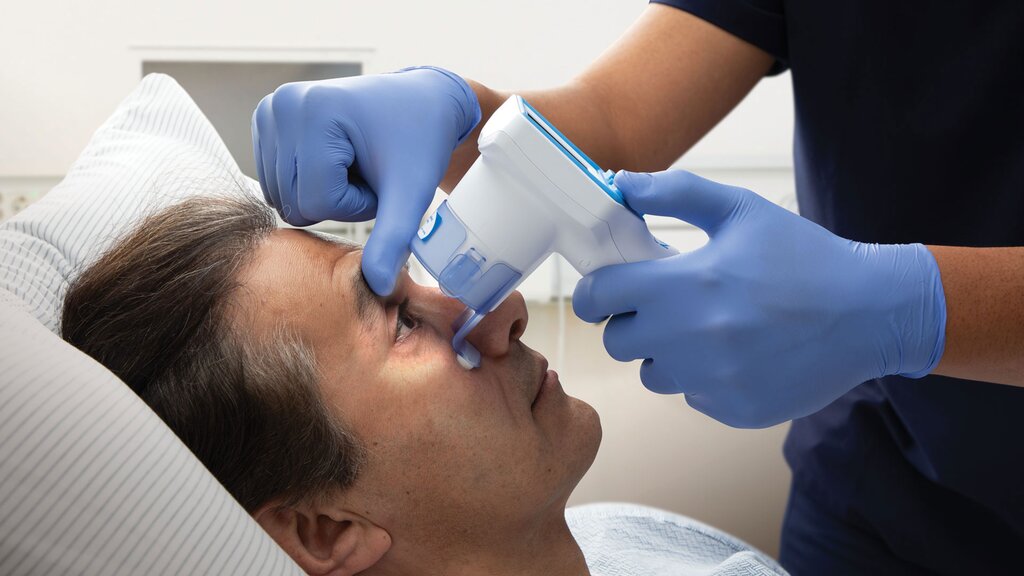
Photo: pixabay.com
The biggest myth: waiting for a cataract to “ripen”
Despite advances in medicine, according to Dr. Daskalov, one of the most dangerous myths continues to delay treatment.
“The notion that ‘a cataract must ripen’ before it can be operated on must be left in the past once and for all.”
He emphasizes that the sooner the surgery is performed, the easier it is for both the surgeon and the patient.
“The techniques are so good that cataract surgery should be performed in a timely manner. The sooner the surgery is performed, the better the functional outcome.”
How does a person know if they have a cataract?
The first symptom is almost always a gradual worsening of vision.
“People start to have trouble seeing the numbers on a clock or calendar, reading becomes difficult, and images become blurred.”
But reduced vision does not always mean cataracts.
“This can also be a symptom of glaucoma, macular degeneration, retinal diseases, dry eye, and other eye conditions. That is why the first step is always an examination by an ophthalmologist.”
The choice of an intraocular lens is now individualized
One of the most important parts of treatment today is the choice of an intraocular lens.
According to Dr. Daskalov, modern ophthalmology offers different options depending on the patient’s age, occupation, and lifestyle. The choice depends on the patient’s lifestyle and the condition of the eye.
Types of intraocular lenses
- Monofocal lenses – provide good vision at one distance (far or near). Glasses are often still needed after surgery.
- Multifocal lenses – allow vision at different distances, but can cause halos and glare in some patients.
- EDOF (Extended Depth of Focus) lenses – provide a greater depth of focus and, according to the interview, are often a good compromise between quality of vision and fewer side effects.
- Toric lenses – used for patients with more pronounced astigmatism.
Who is not a good candidate for multifocal lenses?
According to the doctor, they are not the best choice for professional drivers, people who frequently drive at night, or patients with certain retinal diseases, such as macular degeneration.
“Patients can now choose between monofocal, multifocal, and so-called EDOF lenses – lenses with an extended depth of focus.”
Monofocal lenses provide excellent vision at one distance, while multifocal lenses allow people to see at near, intermediate, and far distances.
In recent years, extended depth of focus lenses have been used increasingly often.
“They are the closest to the physiology of human vision. They provide very good vision for everyday activities – working on a computer, working in the kitchen, and reading at a normal distance.”
Not all patients are good candidates for multifocal lenses
Although multifocal implants reduce dependence on glasses, they are not a solution for everyone.
“They involve the physical phenomenon of halos and glare around lights. That is why we do not recommend them for professional drivers, people who drive at night, or patients with certain retinal diseases.”
For patients with macular degeneration, diabetic retinopathy, or other diseases of the posterior segment of the eye, monofocal intraocular lenses are most often preferred, the ophthalmologist explained.
Astigmatism can also be corrected
More and more patients are also taking advantage of the option to have astigmatism corrected during surgery.
“When we find astigmatism greater than one diopter, we prefer to correct it during surgery by implanting a toric intraocular lens.”
According to Dr. Daskalov, this significantly improves the quality of vision after surgery.

Cataracts in both eyes – surgery at the same time or one after the other?
Dr. Daskalov remains a proponent of the more conservative approach.
“I prefer to operate on one eye first, and then on the other about a month later.”
Surgery on both eyes at the same time is primarily used in specific cases – for example, in young children or patients who require general anesthesia.
Children can develop cataracts too
Although the condition is associated with age, it also occurs in children.
“We see congenital cataracts, genetic diseases, metabolic disorders, and traumatic cataracts.”
In certain cases, intraocular lenses can be implanted at an early age, and these patients are monitored for years.
Every operation carries risks, but complications are rare
Like any surgical procedure, cataract surgery carries risks.
“The primary risks are infection and bleeding. These are risks with any operation. For patients with diabetes, cardiovascular disease, or those taking anticoagulants, preparation is individualized and carried out in collaboration with their treating specialists, the specialist explained.
After surgery
“After surgery, patients use anti-inflammatory and antibiotic eye drops for four to six weeks, followed by lubricating eye drops if needed.
Recovery is usually quick, and most patients report a significant improvement in vision within the first few days, Dr. Daskalov added.
What does the NHIF cover for cataract surgery?
Cataract surgery is performed under a clinical pathway and paid for by the National Health Insurance Fund (NHIF) for patients with health insurance.

Photo: pixabay.com
According to Dr. Veselin Daskalov, however, the intraocular lens (implant) placed during surgery is not covered by the NHIF and is paid for by the patient. The out-of-pocket cost depends on the type of lens selected – monofocal, toric, EDOF, or multifocal – as well as the medical facility’s pricing policy.
“The fund covers the surgery itself, but the implants are still not covered. In other words, the intraocular lenses are paid for by the patient,” explained Dr. Veselin Daskalov.
According to him, this remains one of the issues on which the ophthalmology community has repeatedly called for changes so that patients can have broader access to modern intraocular implants.
Can cataracts be prevented?
Cataracts are a natural part of the aging process.
“About 70 percent of people over age 75 have cataracts.”
According to Dr. Daskalov, there is no proven way to prevent cataracts.
“Having a cataract means you have reached a ripe old age.”
A healthy diet and taking lutein and zeaxanthin can support eye health, but mainly in relation to the prevention of age-related macular degeneration, not as a way to prevent cataracts from developing.
A message to patients
Finally, Dr. Veselin Daskalov shared a message for people who are putting off surgery out of fear.
“Nowadays, there is no need to wait for a cataract to mature. The sooner it is operated on, the better the final result. I currently have a patient with a dark brown cataract who has waited a long time, but we will operate on her, and I believe we will achieve a good result.
Early diagnosis, timely surgery, and the right choice of intraocular lens are the factors that today allow thousands of patients to regain their vision and return to their normal way of life, he concluded.
Gergana Hristcheva’s full interview with Dr. Veselin Daskalov in this episode of the BNR podcast “At the Center of the System” is available >>>HERE.

How to Choose Sunglasses
Sunglasses are more than a fashion accessory – they are important tools for protecting your eyes from ultraviolet (UV) rays.
Read More
Why Is Diabetes a Disease That Concerns Us All?
Author: The Pentagram Medical Center Team In today’s world, our busy lives often lead us to pay attention to our.
Read More