

How to Choose Sunglasses

Sunglasses are more than a fashion accessory – they are important tools for protecting your eyes from ultraviolet (UV) rays and radiation from the sun. These UV rays – UVA and especially UVB – damage the surface tissues of the eye, the cornea and the lens. Over time, this damage can lead to cataracts, macular degeneration and other eye conditions that rob you of your vision.
That is why choosing sunglasses should not be limited to picking a pair that suits your face shape. To serve their purpose, good sunglasses must effectively protect your eyes.
To keep your eyes healthy, keep these tips in mind when buying sunglasses.
- Don’t settle for less than 100% protection
When buying sunglasses, make sure they have a label or sticker stating that they provide 100% UV protection. Some manufacturers’ labels say “UV absorption up to 400 nm,” which is the same as 100% UV protection. If you are unsure about the level of protection, no matter how good they look on you, choose a pair that explicitly states it.
- Darker sunglasses do not always offer more UV protection
When shopping for sunglasses, don’t be fooled into thinking that the darker the lenses, the safer they are for your eyes. Only sunglasses with 100% UV protection provide the safety you need.
- Polarized lenses reduce glare but do not block UV rays
Polarized lenses are designed to reduce glare from various surfaces. Polarization itself does not provide UV protection. Instead, it provides a better visual experience for certain activities, such as driving. However, some polarized lenses are made with UV-blocking protection. Check the label on polarized sunglasses to make sure they provide maximum UV protection.
- Size matters
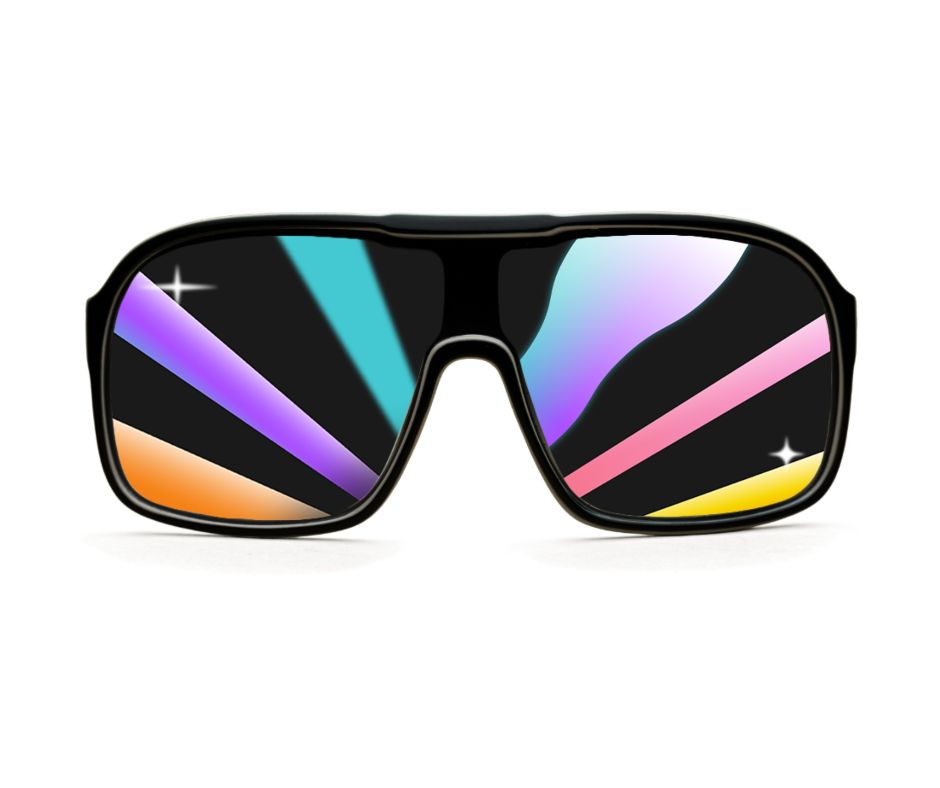
Sunglasses should have the largest possible lenses to protect your eyes from sun damage. This is the only way to limit ultraviolet rays entering through the sides of the glasses.
- Color doesn’t matter
It is a misconception that the darker the lenses, the greater the protection they provide. Some very dark glasses offer no protection at all, while others with very light lenses provide 100% protection. Still, color does matter to some extent, because brown or pink lenses can provide more contrast, which is beneficial for the eyes.
Mirrored sunglass lenses are made from a base lens (glass or plastic) with a thin reflective layer of metals or metal oxides. This coating is applied using a special vacuum deposition process. Although they reduce the amount of visible light entering your eyes, there is no guarantee that they will fully protect you from UV radiation unless this is explicitly stated.

– Mirrored vs polarized sunglasses
Mirrored and polarized sunglasses serve different purposes, blocking light in completely different ways. Mirrored sunglasses reduce the total amount of light, while polarized sunglasses eliminate blinding glare.
Mirrored sunglasses reduce brightness and act like a one-way mirror, reflecting light back outward. They make everything appear darker, helping protect the eyes from fatigue in very bright sunlight. They are suitable for various outdoor sports (skiing, snowboarding, mountain climbing).
In contrast, polarized sunglasses block glare thanks to a built-in chemical filter that allows only vertical light waves through. This prevents glare from water, wet pavement, or snow and improves contrast. They are suitable for driving, fishing, water sports, and everyday wear in the city.
Many modern sports sunglasses combine both technologies, making them even more useful in summer.
- Glasses with plastic lenses vs glasses with glass lenses
The choice depends on whether you prioritize safety and light weight or maximum visual clarity.
Plastic lenses are safer because they are highly impact-resistant and do not break into dangerous, sharp pieces. They are also significantly lighter. A drawback is that they scratch easily.
Glass lenses provide clearer, higher-contrast vision without any distortion. They are scratch-resistant and do not change their properties over the years. Their drawbacks are that they can shatter on impact, making them unsuitable for sports and for children. They are also considerably heavier than plastic lenses.
- Price is no guarantee
Sunglasses do not have to be expensive to be safe and effective. Unbranded sunglasses sold at optical shops and labeled as blocking 100 % of UV rays are sometimes a better choice than designer sunglasses that do not offer full protection.
- Does sun protection decrease over time?
Do older sunglasses still protect your eyes from UV light as well as they did when they were new? Research does not provide a definitive answer as to whether UV protection fades over time. You can have your sunglasses tested. Take them to an optical shop that has a UV testing device to easily check their level of protection.
If you don’t want to bother, it’s a great excuse to buy a new pair. And, as we know, retail therapy has proven benefits, especially for women 😊.
- Suitable sunglasses for people who need prescription glasses
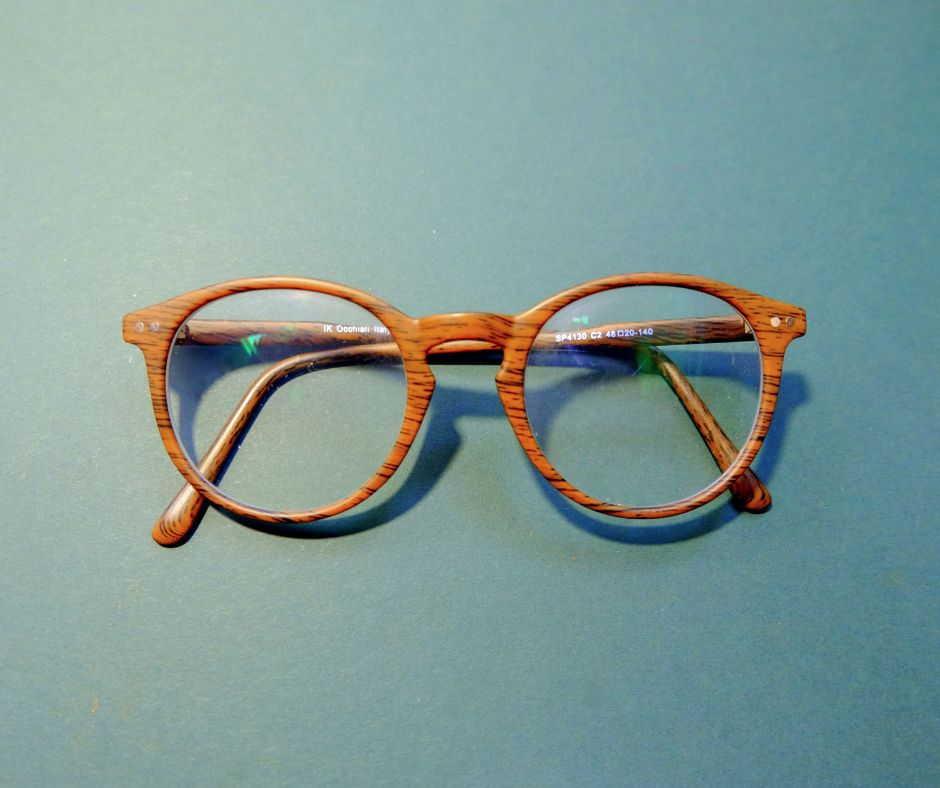
Choosing suitable sunglasses for people with refractive errors (nearsightedness, farsightedness, astigmatism) can sometimes be a challenge. There are four options in this case:
Prescription sunglasses – made to the patient’s individual prescription. They usually look great, but the inconvenience is that you have to carry two pairs of glasses and switch between them when you enter a darker place. They are also usually quite expensive.
Photochromic glasses
Their lenses are clear indoors but automatically darken when you go out in the sun, responding to UV rays. The advantage is that you only carry one pair of glasses. The drawback is that most models do not darken well behind a car windshield because it blocks UV rays. They also do not always look as good as “classic” sunglasses.
Frames with magnetic clip-ons
These are standard prescription glasses with a lightweight sunglass attachment that attaches using a tiny magnet. The advantage is that the prescription glasses turn into sunglasses in a second. The drawback is that not every prescription frame is suitable.
There is also a fifth option – getting rid of your prescription
Correcting farsightedness, nearsightedness, or astigmatism with laser vision correction has thousands of advantages, and being able to wear sunglasses freely is just one of them.
Thanks to modern technology, the procedure is quick (the surgery itself takes less than 30 minutes), safe, and has a guaranteed outcome. It can correct nearsightedness up to minus 10 diopters, farsightedness up to plus 4-6 diopters, and astigmatism up to plus/minus 3 diopters. The procedure is best suited for people between 18 and 45-50 years old, when it also has the best results. (For details, you can consult our specialists.)

What happens during menopause?
Climacterium is one of the most important, yet least discussed stages of a woman’s life. This period, which typically occurs.
Read More
Dr. Ralitsa Kermedchieva Presented an Innovative Therapy for Relieving Dry Eye Syndrome
In front of a full audience at the stage of Central Halls in Sofia, Dr. Ralitsa Kermedchieva presented on Saturday.
Read More