

Cataract surgery: everything you need to know
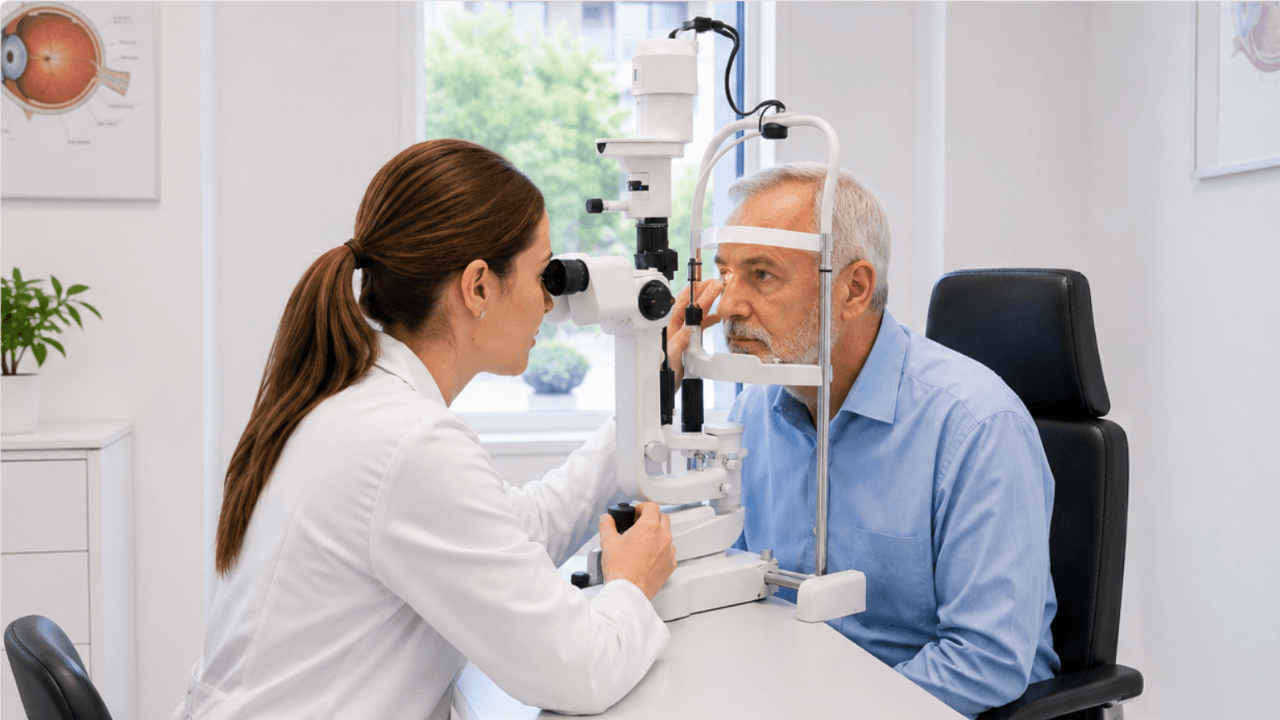
From diagnosis to full recovery – what to expect from cataract surgery
What is a cataract?
A cataract is a condition in which the eye’s natural lens gradually becomes cloudy and loses its transparency. A healthy lens allows light to pass through unobstructed, but over time, the proteins that make up its structure can clump together and change, leading to gradually blurred vision. Cataract surgery is one of the most commonly performed eye surgery procedures and is the only way to definitively treat the condition.
Causes and risk factors for cataracts
In most cases, cataracts are associated with the natural aging process and are most common in older adults, which is why they are often called age-related cataracts. They usually progress slowly and can affect both eyes, with one eye often affected earlier than the other.
Besides age, a number of factors can accelerate the development of cataracts, including:
- Diabetes mellitus
- Long-term use of corticosteroid medications
- Excessive alcohol consumption
- Smoking
- Prolonged exposure to UV rays without adequate protection
- A previous blow or injury to the eye area
- Hereditary predisposition
There are also rarer forms, including congenital cataracts (present at birth) and cataracts that develop as a result of an injury or another eye condition.
Cataract symptoms
In its early stages, a cataract may cause almost no symptoms, especially if the clouding affects the outer edge of the lens. As the condition progresses, however, the following may occur:
- Gradually blurred or cloudy vision
- Difficulty seeing in the dark or while driving at night
- Increased sensitivity to light and glare
- Fading or yellowing of colors
- Double vision in the affected eye
- Frequent changes in eyeglass prescription
If you notice any of these symptoms, consulting an ophthalmologist at Pentagram Medical Center is an important step in identifying the exact cause and determining whether surgery is necessary.
Cataract diagnosis
The first and most important step is an accurate diagnosis. This includes a thorough eye examination of the patient to determine whether cataracts are the only cause of impaired vision or whether there is another coexisting condition that could affect the outcome of surgery. This comprehensive examination is key to achieving an optimal postoperative outcome.
Only after the ophthalmologist is certain that there are no additional eye conditions that could affect the outcome of surgery can the next step begin: choosing an appropriate intraocular lens.
Types of intraocular lenses
After diagnosis, it is important to choose the most appropriate intraocular lens. This is done by taking into account the patient’s individual needs and lifestyle. Intraocular lenses are mainly divided into three classes:
- Monofocal lenses – provide clear vision at one focal distance (usually far).
- Extended depth of focus (EDoF) lenses – offer a wider range of clear vision than monofocal lenses.
- Multifocal lenses – designed to provide good vision at all distances: near, intermediate, and far.
It is important to know that correction for astigmatism can be added to any of the three classes of lenses if the patient needs it.
The choice of lens is highly individual and depends on the patient’s lifestyle, visual habits (e.g., reading, driving, working on a computer), and expectations for the outcome after surgery. That is why discussing the options with the ophthalmologist before surgery is a key part of the process – it helps the patient make an informed decision.
When is the right time for surgery?
The decision to have cataract surgery is made individually, depending on how much blurred vision interferes with the patient’s daily life – reading, driving, working, or other usual activities. Unlike many other conditions, a cataract does not need to be left to fully “ripen” – modern surgical methods allow surgery to be performed at an early stage, as soon as the patient’s quality of life begins to decline.
Preparing for surgery
Once a surgery date has been scheduled and before the procedure, the patient must be examined by a cardiologist and have routine blood tests. These can be done at Pentagram Medical Center, making the entire process easier for the patient and saving time.
The purpose of this preoperative preparation is to ensure that the patient is in good general health and that there are no contraindications to anesthesia and surgery.
On the day of surgery, the patient must come to Pentagram Eye Hospital without having eaten or drunk anything (unless the treating physician has given explicit instructions otherwise).
How is cataract surgery performed?
Cataract surgery is a procedure in which the clouded natural lens of the eye is removed and replaced with an artificial intraocular lens. The goal is to restore clear vision and, when possible, reduce dependence on glasses.
In modern surgery, the most commonly used method is phacoemulsification. The surgeon makes a small incision in the eye and uses a specialized instrument to break up and remove the clouded natural lens. The preselected intraocular lens is then placed in the remaining capsular space.
The procedure is usually performed under local anesthesia so that the patient does not feel pain. Depending on the patient’s individual condition and the medical facility’s protocol, additional sedation may also be given.
Once implanted, the intraocular lens remains in the eye permanently. In most cases, the small incision does not require stitches, and the eye begins to recover within the first few days after surgery.
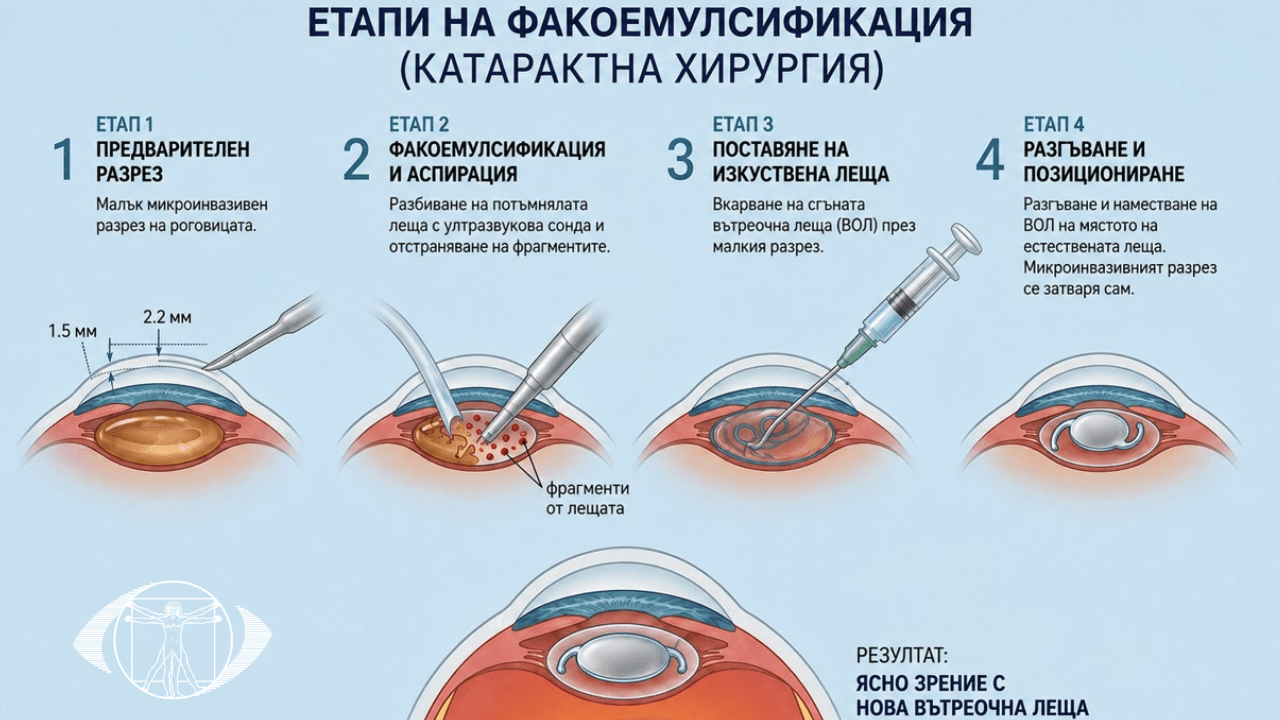
The surgical procedure itself usually takes about 15–20 minutes, but the time spent at the clinic is longer because of preparation before surgery and monitoring afterward.
The specific course of the surgery, the type of anesthesia, and the choice of intraocular lens are determined individually by the ophthalmologist based on the condition of the eye, the patient’s visual needs, and their overall health.
Recovery after surgery
The next day, the bandage is removed and the doctor examines the eye to check for complications. Patients may also come in for a follow-up examination on the 7th day after surgery.
Each patient receives detailed instructions for postoperative care, including:
- Using eye drops according to a prescribed schedule
- General recommendations for activities and eye hygiene during recovery
Strictly following your doctor’s instructions is important for a smooth recovery and the best possible visual outcome.
What should you avoid after cataract surgery?
After cataract surgery, it is important to protect your eye and strictly follow your ophthalmologist’s instructions. During the first few days and weeks after the procedure, you should avoid activities that could irritate the eye or increase the risk of infection and other complications.
Key recommendations include
- Do not rub or press on the operated eye, even if you feel mild discomfort or itching.
- Do not touch your eye with unwashed hands, and maintain good hygiene when applying the prescribed drops.
- Do not stop using your eye drops on your own, and use them exactly according to the schedule prescribed by your ophthalmologist.
- Avoid getting water, soap, and other irritating substances in your eye, especially in the immediate period after surgery.
- Limit strenuous physical activity and activities that could result in a blow or pressure to the eye until your doctor determines that they are safe.
- Do not swim or visit swimming pools, saunas, or other places with an increased risk of eye contamination until your treating physician gives you permission.
- Do not drive until your vision is good enough and your ophthalmologist confirms that you can safely return to driving.
Mild discomfort, sensitivity to light, or a sensation of a foreign body in the eye may occur after surgery and usually gradually subside. However, severe or worsening pain, sudden deterioration of vision, pronounced redness, flashes of light, or a sudden increase in floaters require prompt contact with an ophthalmologist.
Most importantly, follow your surgeon’s individual instructions, as recovery and the necessary restrictions may differ from patient to patient.
Possible risks and complications
Cataract surgery is completed without serious complications in most cases. However, as with any surgical procedure, there are certain risks. Their likelihood depends on the individual condition of the eye, the presence of other eye diseases, and the patient’s overall health.
Possible complications include:
- Inflammation – mild inflammation may occur after surgery and is usually controlled with eye drops prescribed by the ophthalmologist.
- Increased intraocular pressure – in some cases, eye pressure may temporarily increase, requiring monitoring and, if necessary, additional treatment.
- Corneal or retinal swelling – this is usually temporary, but in some cases it may affect visual recovery.
- Infection – a serious intraocular infection is a rare complication, but it requires immediate medical evaluation and treatment.
- Bleeding – bleeding can occur during surgery, but serious bleeding is rare.
- Retinal detachment – a rare complication whose risk may be higher in patients with certain predisposing factors.
- Residual refractive error – despite precise preoperative measurements, some refractive error may remain, making glasses or additional correction necessary.
- Posterior capsule opacification – sometimes, months or years after surgery, secondary clouding known as a “secondary cataract” can develop behind the intraocular lens. This does not mean that the implanted lens has become cloudy again. When necessary, the condition is usually treated with a short laser procedure.
In some patients, other eye conditions, such as glaucoma, macular diseases, or diabetic retinopathy, may affect the final visual outcome, even when the surgery itself was successful.
It is important that patients are informed about both the expected benefits and the possible risks before surgery.
The ophthalmologist performs the necessary tests and discusses the individual characteristics of each case to select the most appropriate treatment approach.
If you experience a sudden worsening of vision, severe or increasing pain, pronounced redness, flashes of light, a sudden increase in floaters, or a sensation of a curtain over your field of vision, seek ophthalmic care immediately.
Consultation with an ophthalmologist
If you have blurred vision, difficulty reading or driving, increased sensitivity to light, or other symptoms associated with cataracts, do not postpone an eye exam at Pentagram Medical Center.
During the consultation, the specialist will assess the condition of your eyes, determine whether cataracts are causing your vision problems, and evaluate whether surgery is appropriate. If necessary, the different intraocular lens options will also be discussed based on your visual needs and lifestyle.
Schedule an eye exam at Pentagram Medical Center by calling 0700 91 191 and take the next step toward better vision.
Frequently asked questions
Does cataract surgery hurt?
No – the eye drop and intravenous anesthesia used ensures that the patient experiences no discomfort during the procedure.
How long does the surgery take?
The procedure itself takes about 15–20 minutes.
Am I awake during the surgery?
Yes, most patients are awake but feel no pain thanks to the anesthesia.
When can I return to my normal life?
The first follow-up exam is the day after surgery, and the next is on day 7. Your treating physician will provide specific guidance based on your individual recovery.
Which intraocular lens is right for me?
The choice depends on the patient’s individual needs – a monofocal, EDoF, or multifocal lens. Astigmatism can be corrected with any of these lenses.

How to Choose the Right Intraocular Lenses: Types and Benefits
When it comes to replacing the eye lens during cataract surgery, choosing the appropriate intraocular lens is essential for restoring.
Read More
The Most Common Retinal Diseases in Children and Adolescents
Children’s retinal diseases: Which ones most often affect your child? At the end of September, we traditionally marked World Retina.
Read More