

Dr. Kermedchieva: Regular preventive care is the key to preserving vision for a lifetime
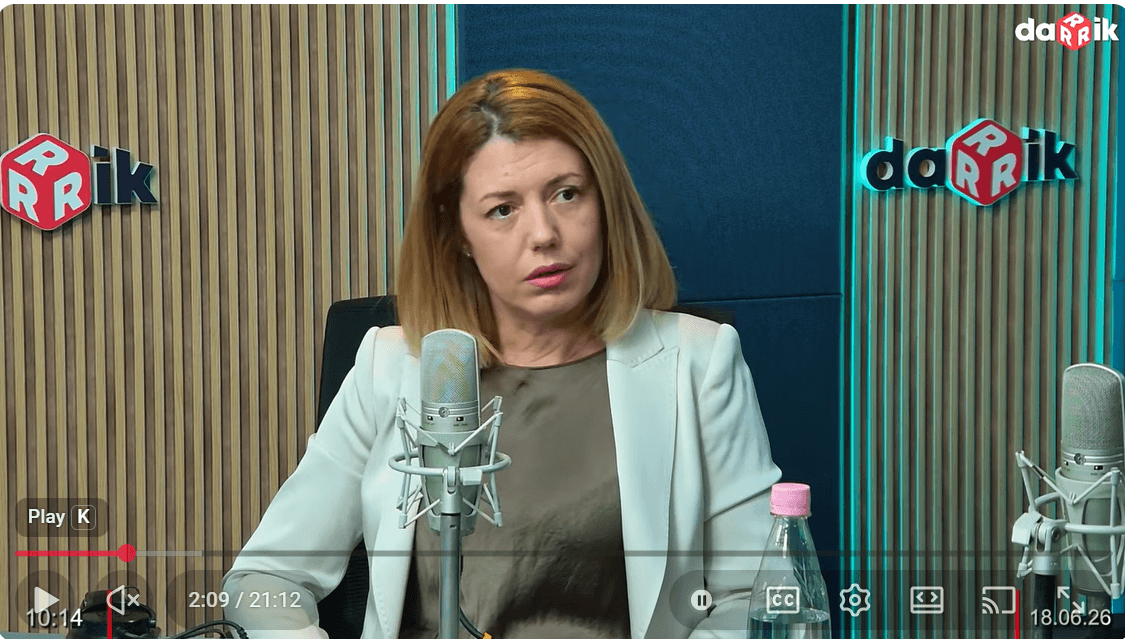
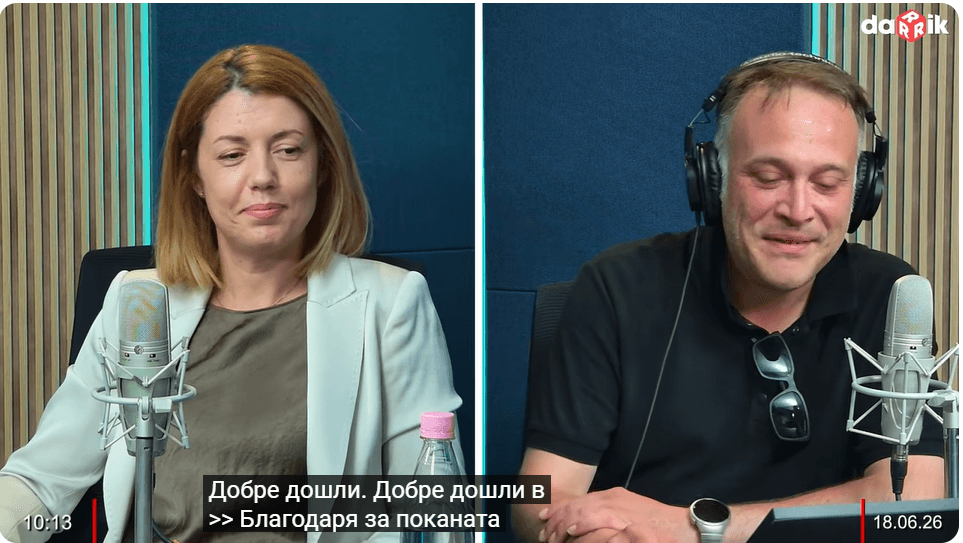
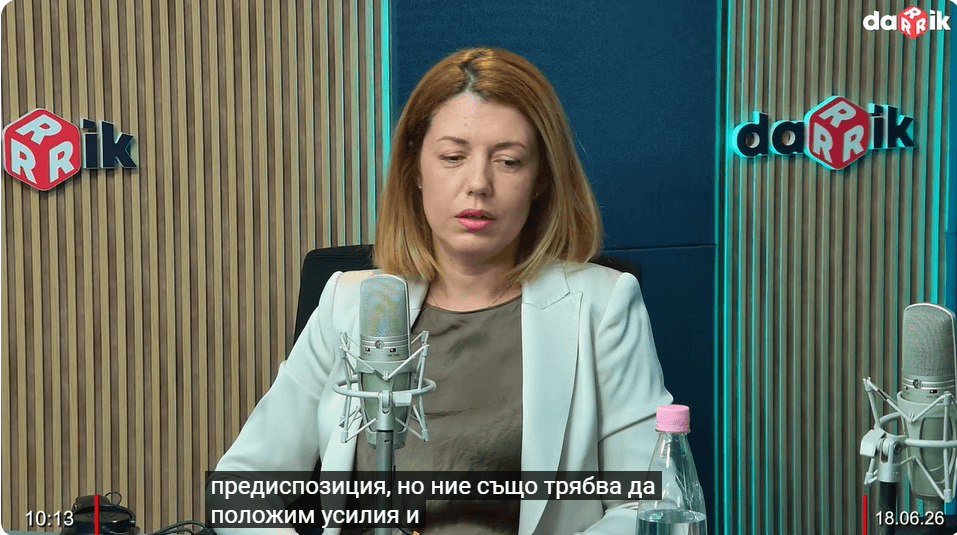
Dr. Ralitsa Kermedchieva, head of the Department of Ophthalmology at Pentagram Eye Hospital, was a guest on Darik Radio to discuss this interesting topic. Speaking with Dimitar Panev, host of the program “The Best Doctors,” she shared her recipe for preserving vision for a lifetime, drawing on her extensive expertise in eye diseases and her experience treating a variety of diagnoses.
Dr. Kermedchieva, is vision longevity genetic, or does it depend on us?
-Of course, there is a genetic predisposition, but we also need to make an effort and take care of our vision every day.
As children, we were told “two hours of TV a day,” but now screens are everywhere, even on our watches.
-That’s right. When we were children, it was easy to limit us to two hours, but now it’s impossible. I also try to limit my child’s screen time, but there’s no way to make it work. We are surrounded by digital devices, and we do all our work on them too. We can’t stop, but we can at least make an effort to protect our eyes while using these devices.
To avoid what is known as computer vision syndrome, we can take care of our visual hygiene. We can put a protective screen on the computer to reduce exposure to blue light. We should also maintain the proper distance when looking at digital devices. It is 35 cm, and the same distance applies when reading a book. If we need prescription glasses, we should take that step to correct our refractive error. We should also follow the 20:20:20 rule: every 20 minutes, move at least 20 steps away from the computer for at least 20 seconds, and ideally look out the window. The lighting we use should not be directed at our eyes, but at the object we are reading. And, of course, we should ventilate the room, maintain good humidity, and if there is an air conditioner in the room, it should not be directed at our eyes.

Even our eyes are affected by air conditioning?
– Yes, because when we concentrate on these digital devices, we blink less often, and the tear film, which should be evenly distributed over the cornea, breaks up. This leads to dry eye syndrome.
What you said about blue light and protective screens caught my attention. Could you tell us more?
– Yes, all major companies are already working in this direction. If you look at our phones, they already have a button that switches the screen to black and white. We can turn it on 2-3 hours before going to sleep. Of course, we cannot completely avoid blue light. Besides being harmful, it is also beneficial because it regulates circadian rhythms (sleep and wakefulness), but we can reduce our exposure to it.
Are light-colored eyes at greater risk of developing certain diseases?
– Light-colored eyes are very beautiful, but they are also very sensitive, especially to light and UV light. I cannot say that they are definitely at risk or predisposed to any particular disease, but they are definitely more sensitive. People with light-colored eyes should take extra care of them during the summer months. Wearing sunglasses with a high level of UV protection is essential.
Which eye diseases are the major scourges today?
– We have already made progress in diagnosing and monitoring many of them, so perhaps they are no longer the scourges they were years ago. But we can call them significant public health concerns: glaucoma, macular degeneration, and diabetic retinopathy are chronic diseases that we need to diagnose promptly so that we can treat them at an early stage and improve patients’ quality of life.
Can we talk about prevention for these diseases?
– Of course! With preventive care, we can detect the signs of many diseases at a very early stage and diagnose, monitor, and treat them appropriately. I definitely recommend a preventive eye exam at least once a year for people who have problems; for younger people, once every two years may be enough.
Is there an age after which problems become more frequent?
– Yes, there is: after age 40-45. The first issue patients come to us with is so-called presbyopia, or age-related farsightedness. Most people who come to us already need reading glasses.
Does everyone eventually develop a cataract, the so-called age-related clouding of the lens?
– No matter how well we live, and especially the longer we live, sooner or later we develop a so-called age-related cataract. This is a degenerative disease in which the lens of the eye becomes cloudy. Thank God, we have excellent methods for diagnosing and surgically treating this condition.
How does the treatment of these diseases in Bulgaria compare with, for example, Western Europe?
– I would say we are at a European, even global, level. We have state-of-the-art equipment for surgery and intraocular lens calculations. We also have a very wide range of intraocular lenses that allow us to provide patients with good vision based on their daily activities. There are different types of intraocular lenses – some require reading glasses, some have an extended depth of focus, and some are multifocal and completely eliminate the need for glasses. These are for active people who lead very busy lives.
Everyone chooses glasses or lenses for themselves, but what do you tend to recommend?
– It is all very individual. It is important to remember that the eye is more than just a lens. It has other structures that must also be healthy for good vision. When the eye is healthy, we can implant any type of lens. However, when the condition of the patient’s eye does not allow for any lens to be chosen, we step in to help them choose the best option.
Regarding the treatability of eye diseases, you said we can be proud of the results?
– I am absolutely certain of that! Bulgaria is at a very high level in terms of ophthalmic care.
Are there still eye diseases that cause irreversible damage?
– Glaucoma is one of them, with the caveat that the damage becomes irreversible if diagnosis is delayed. With glaucoma, what we try to do is stop the disease from progressing.
Macular degeneration – both the dry and wet forms – was also among the diseases for which we could do very little. For many years now, however, intravitreal medications (injections into the eye) have been available and are now also covered by the National Health Insurance Fund. This means we can also be very helpful with macular degeneration. But again, it depends on when the disease is diagnosed. In very advanced cases, we cannot achieve very good results. Regarding dry macular degeneration, we have also had a breakthrough in treatment in the past few years. Until recently, we prescribed only dietary supplements, but we now have devices that can also treat dry macular degeneration. Pentagram Eye Hospital has had such a device since the beginning of the year, and the results are quite encouraging for our patients. That makes us very happy, because we can do something for these patients too.
Are there any basic symptoms that should prompt us to see you?
– Any change in vision. It could be something harmless, such as needing glasses. But it could also be something much more serious. That is why I always advise: at the slightest sign of symptoms, have a comprehensive eye exam that includes measuring eye pressure, dilating the pupils, and examining the back of the eye.
Pupil dilation is apparently an important step?
Of course. It allows us to examine the back of the eye and the retina in detail and check for glaucoma, macular degeneration, and diabetes.
I ask because I, for example, have astigmatism. But it wasn’t the blurred vision that sent me to the doctor; it was the headaches.
– That’s because you ignored the blurred vision for a long time. We all do it, by the way, but as a doctor I have to advise you not to ignore these minor symptoms, because when they persist over a long period, they can lead to something more serious.
That’s right, problems get worse if we don’t pay attention to them. To sum up, the thing that’s always “waiting around the corner” after age 40 is presbyopia, or age-related farsightedness. Is there any way to delay it?
– There’s no way to delay it. It’s physiology, anatomy. I really like the motto “How to live to 100,” but I would add “How to live well.” For me, living to 100 is not as important as having a good quality of life for as long as God has given us. That’s why we strive every day to improve at our work, so we can provide better quality of vision for our patients. But ultimately, everything is in the patients’ own hands. They shouldn’t go to the doctor only when something starts to hurt, but regularly, for preventive checkups. Especially if they have a family history of disease. I’ll come back to glaucoma and macular degeneration. This doesn’t apply to cataracts. Many patients ask me, “Could I have cataracts because my mother and father had them?” That isn’t relevant here, when we’re talking about a normal age-related cataract. But it certainly applies to patients who have direct relatives with glaucoma, macular degeneration or diabetes—all diseases with a very strong familial predisposition.
Artificial intelligence has been getting a lot of attention lately, and we turn to it for everything. How do you use it in ophthalmology, if at all?
– It has been part of our lives for a very long time, including in ophthalmology. Our specialty is developing very quickly in terms of technology. We have a lot of equipment that measures certain parameters in the human eye, and built into that equipment is software that determines whether the results are normal or indicate a condition. It can also predict the progression of a disease—in this case, glaucoma. We’ve been working with this for a long time. There is now software that can also predict the progression of macular degeneration, but it is only just beginning to be introduced. But how far will we allow artificial intelligence to go, and will we let it take over our roles? I think we need to be a little more careful here, so we don’t reach a point where artificial intelligence replaces our own intelligence. It’s a very fine line.
Doctor, what do you think ophthalmology will look like in 10 years?
– It will probably be even more digitalized. The only thing I pray for is that I can work in that field using my own intelligence and not be replaced.
Are your younger colleagues interested in this specialty?
– Oh, yes! They are very eager to enter this specialty because its pathology is so interesting. It is a narrow specialty, but it also involves outpatient care. There are many diseases that we see first in the eye, before they manifest in other organs. We work closely with colleagues in other specialties, which makes ophthalmology extremely interesting. It is also a highly technological specialty that requires us to always keep up with the latest developments. The visual system is a very delicate, complex, and essential structure of the human body. We perceive the whole world through our eyes. Medicine devotes considerable effort to developing new things in this specialty. A biological eye and artificial corneas are currently being developed.
You can listen to the full interview on Darik Radio HERE.
5 Symptoms That Signal a Problem with the Thyroid Gland
The thyroid gland is a small but extremely important organ that regulates metabolism, heart activity, and many other processes in.
Read More
PRESBYOPIA vs HYPEROPIA – what is the difference?
Farsightedness What is important to know? Farsightedness (hypermetropia) is a common congenital vision condition. It represents a refractive error of.
Read More