

Dr. Daskalov: What Glaucoma Takes, It Does Not Give Back
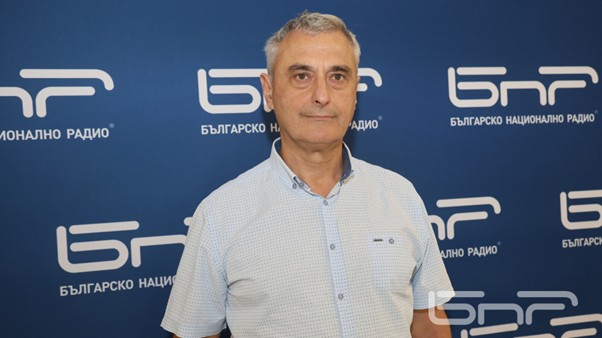
One of Bulgaria’s most experienced eye surgeons discusses elevated intraocular pressure and glaucoma treatment
The second part of Gergana Hristcheva’s interview with Dr. Veselin Daskalov, manager and chief eye surgeon at Pentagram Eye Hospital, on BNR’s podcast “At the Center of the System”
You can listen to and read the first part of Dr. Veselin Daskalov’s interview for the podcast “At the Center of the System,” devoted to modern cataract treatment, HERE.
“Bulgaria has modern options for diagnosing and treating glaucoma, including the latest generation of implants, but success depends above all on early detection of the disease, ophthalmologist Dr. Veselin Daskalov, manager of Pentagram Eye Hospital and Medical Center, emphasized on BNR’s podcast “At the Center of the System.” According to him, the greatest challenge remains the fact that glaucoma has no symptoms, and by the time patients realize they have a problem, the damage is often already irreversible.
“Glaucoma is the silent thief of sight. It is called that because what it takes, it does not give back. An atrophied optic nerve cannot be restored, warned Dr. Daskalov.
According to him, modern surgical implants are now available in Bulgaria and show very good results in patients for whom medication is not enough. Nevertheless, the specialist is adamant that no surgery can restore vision that has already been lost – the only option is to detect the disease in time and stop its progression.
Is there light at the end of the tunnel for Bulgarian healthcare?
According to Dr. Veselin Daskalov, despite all the difficulties, Bulgarian healthcare continues to function and provide accessible medical care.
“We cannot do without it. However much we may think that healthcare is failing, it is not. Yes, we have experienced upheavals and continue to experience them, but we still cannot find a model that satisfies both doctors and patients, the ophthalmologist said.
According to him, the most critical assessments of Bulgarian medicine often contrast with the behavior of Bulgarians living abroad.
“Look at what happens every summer. People returning from abroad almost invariably visit a doctor and a dentist here. They often tell me: ‘I come to Bulgaria because I trust you.’ That says a lot.”
The biggest problem: the shortage of nurses
According to Dr. Daskalov, the staffing crisis is no longer so much about doctors as it is about nurses.
“This is the most painful issue for me as the director of a medical facility. The situation with nurses is tragic. We have enough doctors, and they are qualified, but we have far too few nurses.”
He expressed hope that designating nursing as a protected profession and offering free education would produce results in the coming years.
He believes that the entry of optometrists into ophthalmology practice is another positive change. For more than a decade, Sofia University has offered a bachelor’s degree in optometry, and its graduates are gradually finding positions in eye clinics.
“Optometrists provide excellent support for our work. They perform many of the diagnostic tests, including optical coherence tomography, perimetry, and other specialized tests. They are specifically trained for this work and provide valuable assistance to ophthalmologists.”

Photo: Gergana Hrishcheva, BNR
According to Dr. Daskalov, this practice is already partially offsetting the shortage of nurses at specialized eye centers.
Is ophthalmic care accessible?
Despite criticism of the health care system, the ophthalmologist believes that patients in Bulgaria have access to a good network of specialists and diagnostic services.
“We have enough well-trained specialists and modern equipment. Today, even in many regional cities, there are perimeters and eye scanners that can diagnose glaucoma at an early stage. Early detection is the key to preserving vision.”
He emphasizes that modern medicine now has technologies that allow the disease to be monitored much more precisely than in years past. However, the greatest risk remains waiting too long to see a specialist.
“The patient often has no symptoms at all. That is precisely why glaucoma remains one of the most insidious eye diseases.”
Why is glaucoma called the “silent thief of sight”?
Glaucoma is one of the leading causes of irreversible blindness worldwide, and its greatest danger is that it has almost no symptoms in its early stages.
“Glaucoma is a neurodegenerative disease in which the optic nerve is damaged as a result of inadequate regulation of intraocular pressure. It is called the silent thief of sight because patients have no symptoms for a long time and often discover the problem only after irreversible vision loss has occurred,” Dr. Veselin Daskalov added.
According to him, the disease is far more than elevated eye pressure—that is only one of the indicators specialists monitor.
Not all high eye pressure means glaucoma
One of the most common misconceptions is that any increase in intraocular pressure means glaucoma.
“Pressure alone does not establish the diagnosis. There is a condition called ocular hypertension: the patient has high intraocular pressure but no damage to the optic nerve and no changes in the visual field. This is not glaucoma.”
This condition is often seen in younger people who spend long hours in front of a computer or do work that requires prolonged close-up focus.
Working in front of a monitor for 10–12 hours, reading for long periods, or working with small details strains the eye’s accommodation. This can lead to a temporary increase in intraocular pressure without glaucoma damage, the ophthalmologist added.
In these cases, treatment is different and focuses on improving visual habits, reducing eye strain and, when necessary, using medications.
Glaucoma does not always involve high eye pressure
“In addition to classic glaucoma with elevated intraocular pressure, there are patients whose pressure remains within the normal range, but whose optic nerve continues to sustain damage nevertheless.
We have high-pressure glaucoma, normal-pressure glaucoma, and even low-pressure glaucoma. That is precisely why a diagnosis can never be made based on an eye pressure measurement alone.”
That is why ophthalmologists use a combination of specialized tests.
The three main tests used to make the diagnosis
According to Dr. Daskalov, a glaucoma diagnosis is based on three required criteria.
- 1. Measurement of intraocular pressure.
- 2. Visual field testing (perimetry), which shows whether the patient is beginning to lose peripheral vision.
- 3. Optical coherence tomography (OCT), which measures the thickness of the nerve fibers in the optic nerve and detects the earliest signs of damage.
“Modern devices can now not only measure the thickness of the nerve fibers, but also assess the blood supply to the optic nerve. This allows us to detect the disease much earlier than we could years ago.”
How does the optic nerve die?
According to the specialist, the main problem is that elevated intraocular pressure gradually disrupts the blood supply to the optic nerve.
“Elevated pressure compresses the small blood vessels that supply the optic nerve. Chronic ischemia develops, and nerve cells gradually begin to die.”
That is why glaucoma is considered not only an eye disease but also a neurodegenerative disease.
Photo: pixabay.com
In the past, some specialists also classified it as a vascular disease because it is often seen alongside thrombosis of the retinal vessels and other blood supply disorders.
“In older adults, impaired circulation in the eye can lead to blood clots. It is not uncommon for glaucoma to occur alongside retinal vascular occlusions.”
The most common form remains asymptomatic
About 70–80 percent of all patients have primary open-angle glaucoma, a form that can go unnoticed for years.
“This is the most insidious form. There is no pain, no redness, and no sudden loss of vision. The disease is discovered by chance during a routine eye exam or when there is already serious damage to the optic nerve.”
The other form—angle-closure glaucoma—is much rarer, but usually has a dramatic course, with an acute attack, severe pain, and a sharp increase in intraocular pressure.”
“What glaucoma takes, it does not give back”
“People need to know one thing: glaucoma is called the silent thief not only because it has no symptoms, but because what it takes, it does not give back. An atrophied optic nerve cannot be restored. There is no treatment that can bring back nerve fibers that have died.”
He compares the optic nerve to a multi-strand electrical cable.
“The optic nerve is like a cable made up of thousands of fibers. When some of them are severed, they can no longer be restored. That is why the goal of treatment is never to restore vision, but to preserve what remains.”
According to him, scientists are actively working on artificial retina technologies and various neuroprotective approaches, but so far none of them can restore a damaged optic nerve.
“Progress has been enormous, but the connection between the eye and the brain remains the greatest challenge. The day we are able to restore this connection will be a true revolution in ophthalmology.”
From eye drops to modern implants: How glaucoma is treated
Advances in ophthalmology over the past several decades have fundamentally changed the options for controlling glaucoma. While years ago the choice was limited to a few medications and surgery, patients today have access to a wide range of medications, laser procedures, and modern implants that can slow the progression of the disease for a long time.
“When I began my career nearly 40 years ago, we had two types of eye drops that constricted the pupil and caused patients considerable discomfort. Today we have a wide choice of medications with different mechanisms of action, and this has significantly improved control of the disease,” Dr. Veselin Daskalov added.
According to him, advances in drug therapy are one of the reasons the number of glaucoma surgeries has declined.
“Patients today are much better managed with medication. That is why we perform fewer surgeries than we did years ago.”
When are eye drops no longer enough?
Despite advances in drug treatment, there are cases in which intraocular pressure cannot be controlled with medication alone.
In those cases, the next step is laser treatment.
“We use selective lasers that improve the drainage of intraocular fluid through the trabecular meshwork. Figuratively speaking, they ‘clean’ the eye’s natural drainage channels. The effect is not immediate, but for many patients it is good, although temporary.”
When this option has also been exhausted, the next step is surgery.
Traditional surgery remains the gold standard
The most widely used surgical technique remains trabeculectomy, an operation that creates a new pathway for intraocular fluid to drain.
“During this operation, we create a small channel between the anterior chamber of the eye and the space beneath the conjunctiva. This lowers intraocular pressure and protects the optic nerve from further damage.”

Photo: Ani Petrova
This remains the most commonly performed operation in Bulgaria as well, but in recent years new minimally invasive technologies have been added to the available options.
New implants: One of the greatest hopes for patients
According to Dr. Daskalov, the development of microimplants is among the most significant advances in glaucoma treatment.
He says implants now exist that were developed using technologies originally used in cardiovascular surgery.
“Today we have modern implants that provide better control of intraocular pressure and lead to fewer postoperative complications.”
The results of the latest clinical studies were presented at the most recent European Glaucoma Congress, held in Brussels.
“It was reported that one of the new generations of implants, PreserFlo, which was first introduced in Bulgaria at Pentagram Eye Hospital, shows a very good success rate, a long-lasting effect, and significantly fewer complications. The good news is that this technology is now available in Bulgaria as well.”
The specialist explained that implants are not removed after placement and can provide long-term control of the disease.
Most importantly, surgery does not restore lost vision
Dr. Daskalov emphasized that no modern operation can restore nerve fibers that have already been destroyed.
“Patients need to know that surgery does not cure glaucoma in the sense of restoring vision. It only stops or significantly slows further damage to the optic nerve.”
That is precisely why early diagnosis remains critical.
Why should patients never stop treatment on their own?
“Glaucoma is a chronic disease. Treatment is lifelong. The drops are not used for a month or two, but for life.”
According to the specialist, it is not uncommon for patients to decide on their own to stop treatment.
“We prescribe treatment and invite the patient for a follow-up examination a few months later, and they tell us, ‘I stopped the drops to see how I was doing without them.’ This is one of the most serious mistakes. We want to see how the treatment is working, not what happens without it.”
If medications cause discomfort or do not have the desired effect, self-treatment is not the solution.
“The patient should contact their treating ophthalmologist. If necessary, we will change the treatment, offer laser treatment, or perform surgery. But treatment should never be stopped on the patient’s own initiative.”
Photo: pixabay.com
Diet, diabetes, and lifestyle also matter
Although glaucoma is not a disease that can be treated with diet, certain factors can affect its development and control.
According to Dr. Daskalov, diabetes is among the most important coexisting conditions.
“Diabetes damages all blood vessels in the body, including those in the eye. With advanced diabetes, neovascular glaucoma can develop—one of the most severe and difficult-to-treat forms of the disease.”
Blood sugar control is important not only for overall health but also for protecting vision.
The specialist also addressed frequently asked questions about coffee and alcohol.
“We do not recommend drinking excessive amounts of fluids all at once. As for coffee, we believe that caffeine can temporarily increase intraocular pressure in some patients, so we advise drinking it in moderation.”
He also discussed the connection between glaucoma and thyroid diseases.
“In cases of thyrotoxicosis, we often see elevated intraocular pressure. That is why we work closely with endocrinologists – when the underlying disease is brought under control, the condition of the eye also improves.”
The doctor also explained what glaucoma care is covered by the National Health Insurance Fund, whether some glaucoma eye drops are consistently unavailable, and addressed the topic of childhood glaucoma.
“Still, the greatest joy is when a patient tells me during morning rounds, ‘Thank you, doctor, I can see again.’ And there are at least 10 such patients a day, which is no small number…”
You can listen to Gergana Hris evа’s full interview with Dr. Veselin Daskalov in the new episode of the Bulgarian National Radio podcast “At the Center of the System” HERE.
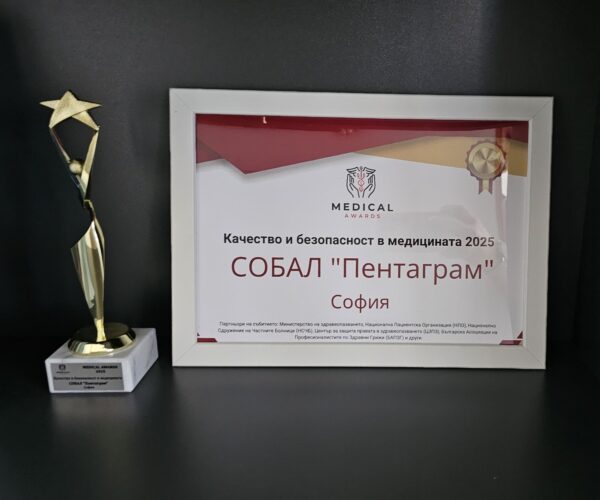
Pentagram Eye Hospital is the Hospital of the Year in the category “Quality and Safety in Medicine”
Pentagram Eye Hospital is the Hospital of the Year in the category ‘Quality and Safety in Medicine’. For the second.
Read More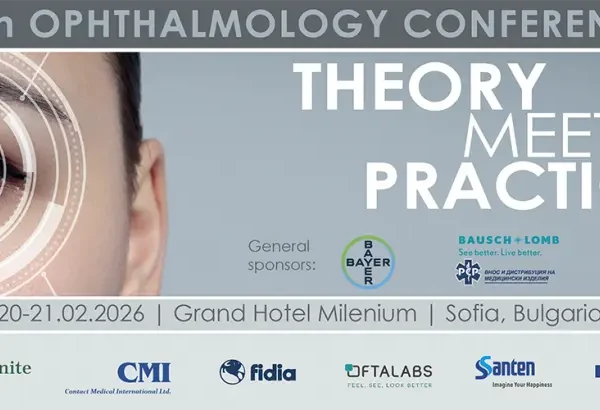
The Conference ‘Theory Meets Practice’ Brings Together the Elite of Ophthalmology in Bulgaria and the Region in February
The conference 'Theory Meets Practice' gathers the elite of ophthalmology in Sofia. Innovations in treatment, speakers from Europe, and credit.
Read More