

Strabismus in Children Can Lead to Developmental Delays

Author: Dr. Nadezhda Muneva – Dragoeva,
children’s eye specialist – PENTAGRAM Eye Clinic
Strabismus, more commonly known to patients as squint, is a condition where the eyes do not move parallelly and are not directed in the same direction when attempting to focus on an object. For example, when one eye looks forward, the other deviates inward, outward, upward, or downward.
Strabismus is a condition that should not be regarded solely as a cosmetic defect, especially in childhood, due to the consequences it has on children’s vision and neuropsychological development.
Deviation of one eye in a different direction leads to disturbed motor development in growing children – improper judgment of distance, difficulty performing fine work, harder adaptation to sports requiring coordination, and delayed learning of writing and reading.
Certain types of squint cause children to hold their heads tilted in a specific way, resulting in muscular imbalance, spinal deformities, and pain.
When treatment is delayed, we miss the period during which it is possible to develop binocular and stereoscopic vision, and there is also a risk of developing lazy eye. Not least, treatment at a later age typically does not allow the use of non-surgical methods and is associated with more unstable and unsatisfactory results from surgical methods.
The period up to the age of 8 is extremely sensitive for children’s vision – on one hand for the development of diseases but, on the other hand, for effective and comprehensive treatment. That is why we advise parents that annual eye checkups should be part of the overall prevention plan for every child.
Until when is it normal to see eye deviation?
In practice, we often hear that the child was not brought earlier to us due to waiting for the condition to resolve on its own or for the child to ‘outgrow’ it. It is normal to periodically observe eye deviation in newborns until the 3rd or 4th month. Permanent deviation of one eye during this period and beyond should be monitored by a children’s ophthalmology clinic.
How to prevent the development of strabismus?
Strabismus in children is, in most cases, congenital or due to genetic predisposition and is not caused by external factors or daily habits. However, the trend of strabismus appearing in children using electronic devices from an early age is concerning. Phones and tablets are often in the hands of youngsters, and they easily bring them too close. Their eyes inevitably converge towards the nose to maintain a single image, and through the high neuroplasticity in children during this period, the improper positioning of the eyes can quickly become ‘encoded.’ Excessive screen usage at an early age further suppresses the neuropsychological development in children, and subsequently, poorly developed cortical functions can also lead to the initiation of strabismus.

What are the methods for treating strabismus?
Glasses – in cases where the reason for eye misalignment is a high refractive error or a significant difference in refractive errors between the two eyes.
Occlusion – covering one eye – rarely used as a standalone method, it is usually part of the overall treatment algorithm for strabismus. It is important that parents do not initiate eye occlusion before consulting a doctor, as in many cases of strabismus this leads to an additional disruption of binocular vision.
Exercises – various types of vision therapy exist that successfully teach children to use both eyes simultaneously, aiding the treatment process.
Surgical treatment – involves surgically repositioning the attachment points of the eye muscles to ‘straighten’ the eyes. The intervention is performed on the external muscles that move the eyeball.
***
Dr. Nadezhda Muneva-Dragoev leads the Pediatric Eye Department of Eye Clinic ‘PENTAGRAM.’ She graduated in medicine from MU-Sofia in 2019, after which she immediately began specialization at Eye Clinic ‘Visus’ under the guidance of Assoc. Prof. Violeta Chernodrinska. She will receive her specialty in ophthalmology in 2024. Her professional interests focus on pediatric eye diseases, the diagnosis and treatment of strabismus, lazy eye, and myopia.
Dr. Muneva examines newborns, children, and adults with a referral from NHIF, via a health fund or against payment.
To book an appointment:
- tel. 0700 91 191
- online from HERE
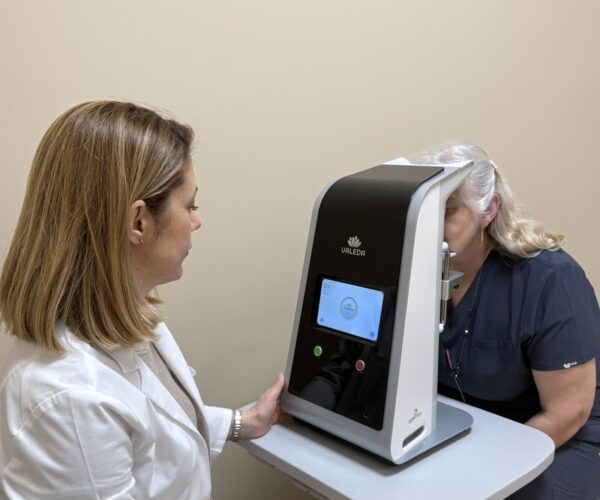
VALEDA – modern therapy for the dry form of macular degeneration
VALEDA is a modern non-invasive therapy for the dry form of macular degeneration, based on photobiomodulation and light treatment.
Read More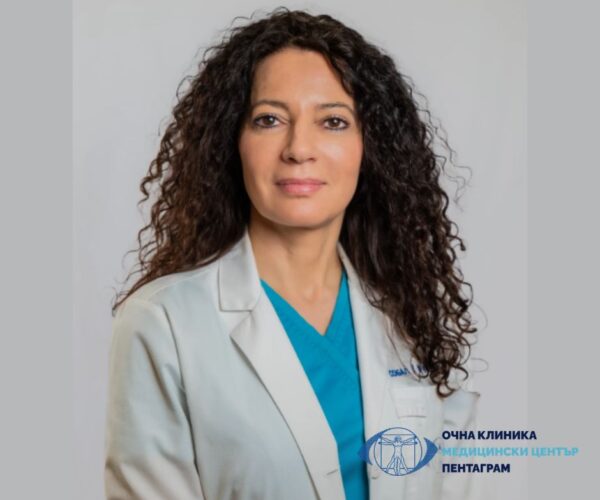
Allergic conjunctivitis is usually observed in patients with other allergic conditions
Author: Dr. Tanya Bozeva Ophthalmologist at Specialized Eye Clinic ‘PENTAGRAM’Allergic conjunctivitis represents inflammatory diseases of the conjunctiva caused by an.
Read More